

The careers of journalists of colour and female journalists who are anti-genocide and anti-war are in peril in Canada, not only from the mainstream media and institutions, but from other journalists with a hard-on.
Here is a summary of Canadaland’s phishing scandal
Some supporting evidence. Click to read the full threads


Everyone is paying the cost for Trump’s ego
The return on investment of this obscene spending is garbage, and without objectives and a robust strategy for this conflict, the results may be sub-optimal for both Israeli and American pursuits.
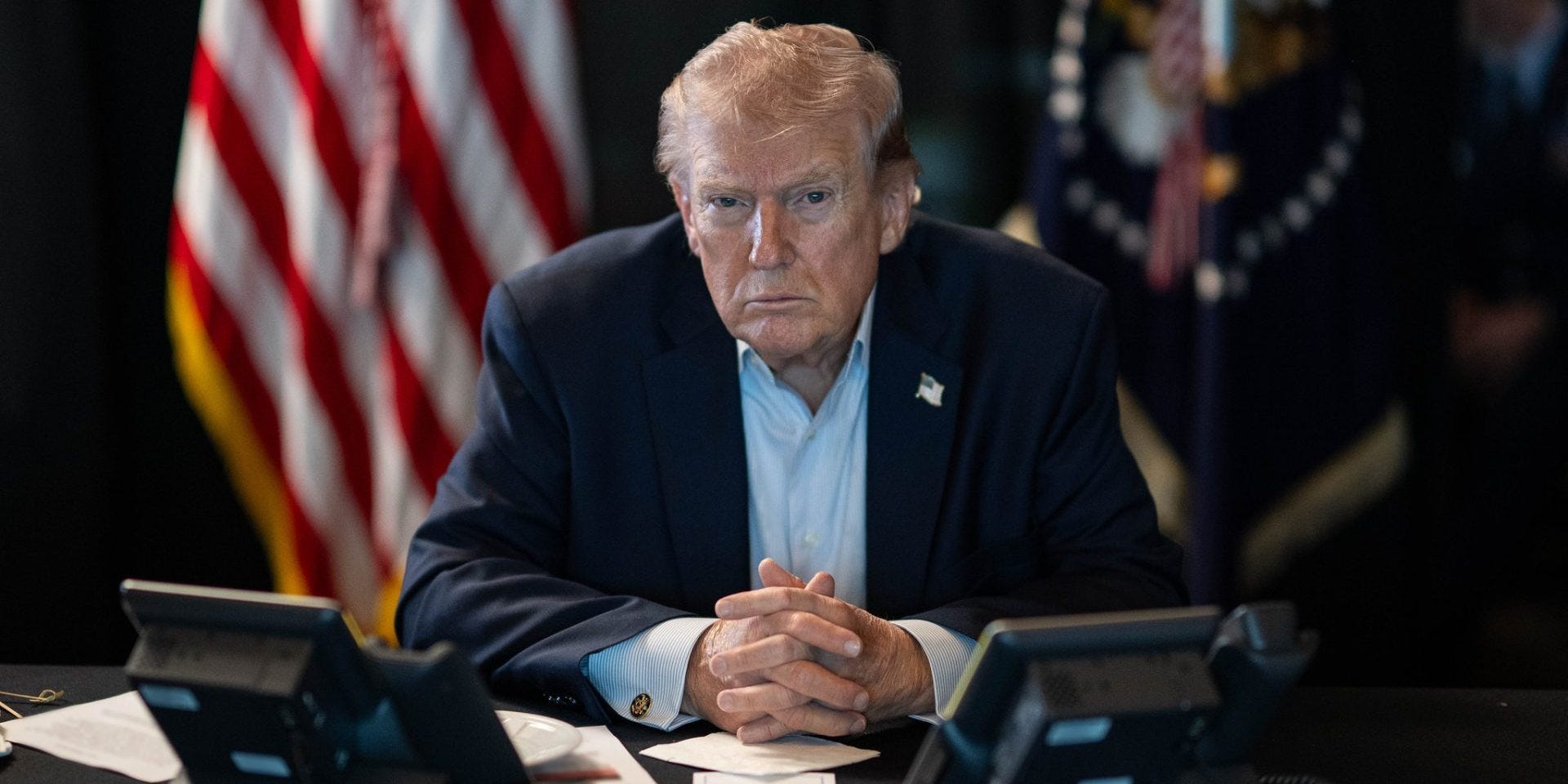
CALGARY—The Iran war is a military omnishambles of epic proportions, and it’s not getting any better. This war began as the brainchild of Israeli Prime Minister Benjamin Netanyahu, who convinced United States President Donald Trump that he would be the only president to bring down the Islamic Republic, betting on Trump’s metastasized ego to complete the task. It worked.
Buoyed by the “success” of his military escapade in Venezuela, where the U.S. military captured/kidnapped President Nicolás Maduro and replaced him with puppet leadership, Trump was feeling himself. On Feb. 28, he launched Operation Epic Fury, with air strikes killing Iranian Supreme Leader Ayatollah Ali Khamenei. The expectation was that victory was nigh, only for the inconvenient truth of a more-resilient enemy to emerge; the regime did not fall. The entire world is now engulfed in the consequences of an ill-conceived, haphazardly implemented war for the benefit of Israel’s bloodthirsty hegemonic expansion in the region, and Trump’s imperialist narcissism.
While the prowess and power of the U.S. military is unmatched, it has not won a conflict since the Second World War; Korea, Vietnam, Cuba, Afghanistan, and Iraq were all wars America lost with its superior military. It is also the most expensive, and therefore the return on investment is questionable.
The U.S. has “estimated the cost of the war against Iran had exceeded $11.3-billion in the first six days alone,” as reported by The New York Times. The Pentagon is expected to request another US$50-billion. Much of the money is spent on ammunition, which has revealed questions about America’s wartime industrial capacity. As estimated by the Foreign Policy Research Institute, in the first four days, “the U.S.-led coalition expended approximately 5,197 munitions across 35 types,” which “represents a significant industrial burden for replacing some munitions that cannot be replenished in four days, four weeks, or even four months.” Despite Trump’s statements to the contrary, America does not have the manufacturing capability to keep up with the weaponry it needs to keep pace with the operation, nor does it have the rare earth minerals to produce modern defence munitions or technology, such as Tomahawk cruise missiles. China dominates global production.
Now we know why the country can’t afford universal health care.
Iran, on the other hand, uses cheaper drones, less-advanced technology, and is still holding their own. As reported by USA Today, the chairman of the Joint Chiefs of Staff, Gen. Dan Caine, “told reporters on March 10 that Iran’s ballistic missile attacks ‘continue to trend downward 90 per cent,’ and its one-way attack drones have ‘decreased 83 per cent’ since the beginning of the war.” That would be a good statistic on its own; however, asymmetric costs could hamper tactics in the future. The idea was to start the war with an aggressive air campaign, overwhelm the enemy, and destroy the regime. Not surprisingly, this did not happen, and there was no plan for a sustained Iranian resistance. The Times of Israel reported that the U.S. “struck more than 3,000 targets during the first week of the Iran war.”
The return on investment of this obscene spending is garbage, and without objectives and a robust strategy for this conflict, the results may be sub-optimal for both Israeli and American pursuits; the ROI is a harder Iranian regime. Khamenei was replaced by his son, Mojtaba Khamenei.
“His selection could be a sign that more hardline factions in Iran’s establishment retain power, and could indicate that the government has little desire to agree to a deal or negotiations in the short term,” explained Al Jazeera. To recap: Trump and his cronies spent billions of dollars in a week to produce a worse government than was there before.
Now, the Americans are sending in ground troops. The desperation for control of this conflict is palpable.
The U.S. operates many bases in the Middle East, located in countries such as Qatar, Kuwait, and United Arab Emirates, all of which are in the direct line of Iranian drones and missiles. There are approximately 40,000 to 50,000 personnel across all bases in the region. Iran has made it clear that those sites will be vulnerable to target. And target it has. American and Israeli military actions have left these countries militarily naked with zero protection.
In defending themselves from Iranian missiles, the Gulf states must deploy interceptors that cost a king’s ransom. Al Jazeera reported that Kuwait has spent between US$800-million and US$1.5-billion; Qatar spent US$600-million to $900-million; and the UAE has forked over between US$1.3-billion and $2.6-billion. “Every interceptor fired represents resources that cannot be replaced overnight, raising fears that defence stockpiles could be rapidly depleted.” Conversely, in launching these attacks, Iran has only spent US$194-million to $391-million, thereby making the financial burden of launching the attacks cheaper than defending against them. This is not sustainable for anyone, and neither is this war.
Find Bad + Bitchy:


