

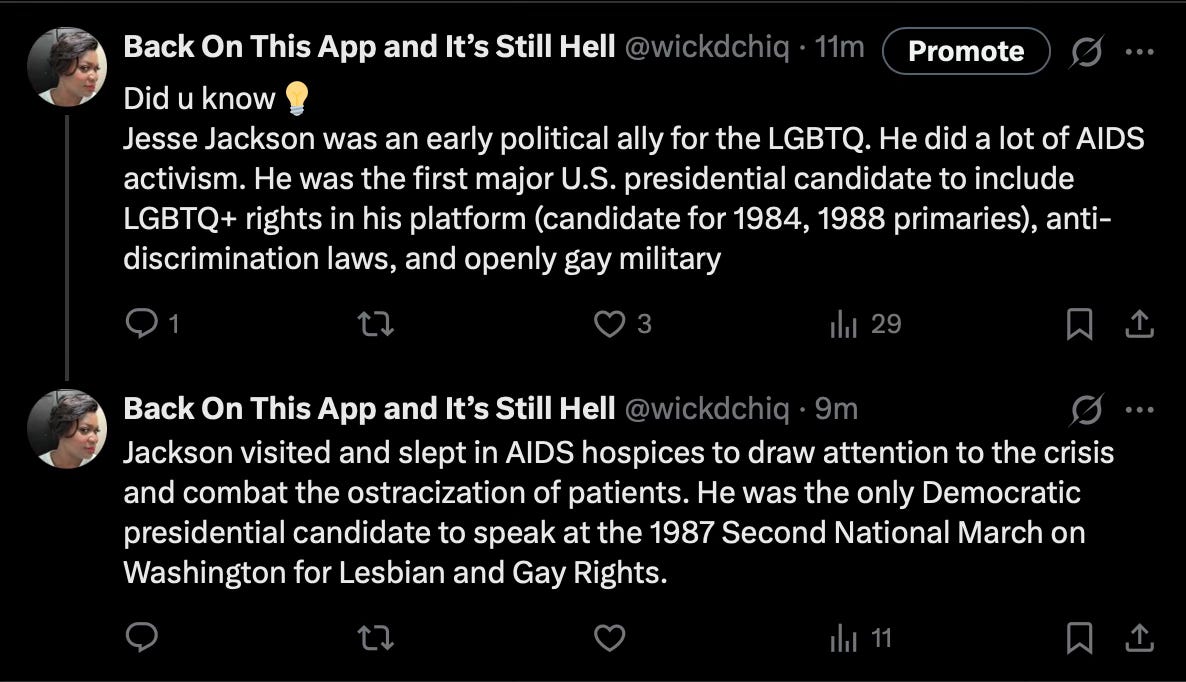
Jesse Louis Jackson Sr. (October 8, 1941 – February 17, 2026) was an American civil rights activist, LGBTQ rights activist, politician, and ordained Baptist minister. A protégé of Martin Luther King Jr. and James Bevel during the Civil Rights Movement, he became one of the most prominent civil rights leaders of the late 20th and early 21st centuries and an ardent advocate and early supporter of LGBTQ rights in the United States.
In Africa, Jesse Jackson Was Esteemed for His Fight Against Apartheid (gift link)
Born in Greenville, South Carolina, Jackson began his activism in the 1960s and founded the organizations that later merged to form the Rainbow/PUSH Coalition. Expanding his work into international affairs in the 1980s, he became a vocal critic of the Reagan administration and launched a presidential campaign in 1984. Initially viewed as a fringe candidate, he finished third for the Democratic nomination behind former vice president Walter Mondale and Senator Gary Hart. He continued his activism and mounted a second presidential bid in 1988, finishing as the runner‑up for the Democratic nomination to Massachusetts governor Michael Dukakis.
1983 Syria
In 1983, Jesse Jackson travelled to Syria to secure the release of the captured American pilot Robert Goodman, who was being held by the Syrian government. Goodman had been shot down over Lebanon while on a mission to bomb Syrian positions there during the Lebanese Civil War 1975 to 1990.
1984 Cuba
Following talks in Havana, Castro agreed to release 26 Cuban prisoners (including former close allies and political dissidents) and 22 Americans held in Cuba. One of them was allegedly an American spy who had been imprisoned during the Bay of Pigs debacle
1991 First Gulf War (Kuwait)
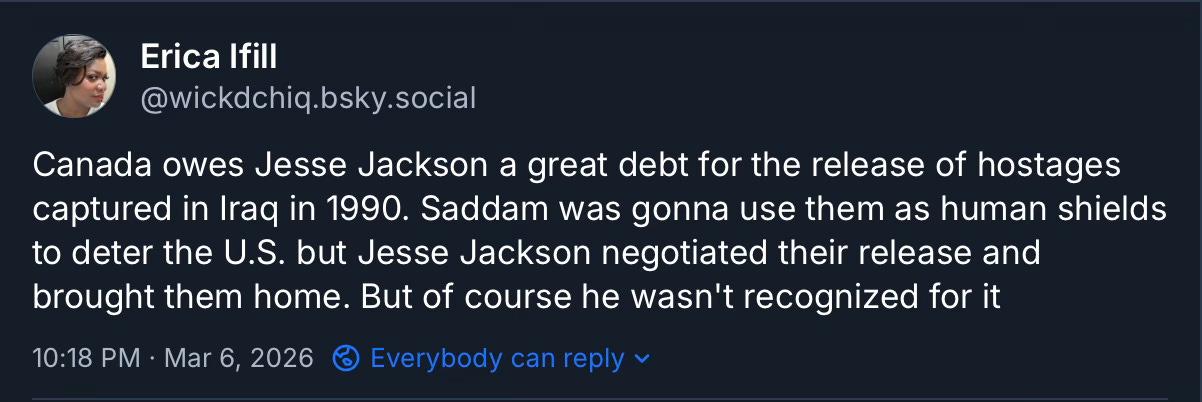
Rev. Jesse Jackson negotiated with Saddam Hussein in Baghdad, securing the release of over 200 Westerners—including 47 Americans—held as “human shields” after Iraq’s invasion of Kuwait. Jackson’s humanitarian mission, which included bringing home sick and elderly hostages, provided a temporary diplomatic opening despite criticism from the U.S. government.
In 1999, Jackson negotiated the release of U.S. soldiers held by Serbian forces in Kosovo, and helped negotiate the release of four journalists held in Liberia the following year.
How’d He Do It?
Jackson’s empathetic approach and genuine concern for the hostages’ welfare allowed him to establish a rapport with the captors. He also demonstrated his commitment to addressing the broader political grievances in the region, which resonated with the militants and built rapport.
Example: 1985 TWA flight 847
In summer 1985, Hezbollah hijacked the Trans World Airlines flight leg from Athens to Rome for 17 days (its final destination was San Diego). They demanded the release of a total of 766 prisoners from Israeli custody and took the plane repeatedly to Beirut and Algiers. Jesse Jackson called on Israel to free hundreds of prisoners and offered to go to Beirut to negotiate for the release of 40 remaining hostages. As of 2023, Hezbollah continues to deny involvement.
Jackson utilized what was termed “citizen diplomacy” or “faith-based diplomacy,” focusing on personal, high-level meetings with foreign leaders, which often bypassed official, stalled government channels.
Find Bad + Bitchy:


