

Thoughts on Mark Carney’s speech at the World Economic Forum. This is where Carney shines and why Pierre Poilievre could never. There are levels to this shit.
Mark Carney speaks at Davos
There’s no security without Indigenous sovereignty
The boost in defence spending won’t amount to much without first ensuring Inuit prosperity, which is key to Canadian authority in the Arctic.
OTTAWA—Prime Minister Mark Carney’s commitment to defence spending is unmatched compared to previous decades; in 2013, Canada’s defence spending was barely one per cent of GDP. The most recent federal budget carved out “$81.8-billion over five years on a cash basis, starting in 2025-26, to rebuild, rearm, and reinvest in the Canadian Armed Forces.” The budget pledged to “put Canada on a pathway to meet the NATO Defence Investment Pledge of investing [five] per cent of GDP in defence by 2035.” Carney’s new Defence Industrial Strategy is intended to strengthen the defence industry from job creation to technological investments to supply chain sovereignty. In fact, a Canadian company, Roshel, provides armoured vehicles for the United States’ Immigration and Customs Enforcement, the agency responsible for kidnappings, involuntary detention without charge, and a whole host of human and civil rights violations. But I digress.
The White House’s National Security Strategy dropped on Dec. 4, and it’s not looking good for NATO. The U.S. not only wants European countries to “willingly take more responsibility for security,” but also indicates a pullback from NATO through limiting security guarantees for the European nations right at a time when Russian aggression is rising. The document promotes “[e]nabling Europe to stand on its own feet and operate as a group of aligned sovereign nations, including by taking primary responsibility for its own defense.” In other words, America is pulling back like a love-bomber after three dates.
Without America what is the point of NATO? I have no clue. NATO is a walking corpse, and has shown its inherent weakness through internal divisions. However, Canada still has an interest in thwarting Russian aggression, and that’s in the Arctic. What is surprising is that there is no mention of an Arctic strategy in America’s national security document. Canada’s alliance with NATO may provide backup against Russian aggression in the North.
Why do we care about the Arctic? That’s the next major battleground as Russia, Denmark (through Greenland), Finland, Iceland, Norway, Sweden, and the U.S. all claim territory. Canada claims approximately 1.2 million square kilometres of the region. As a result of the climate crisis, the Arctic glaciers are melting at an increasingly rapid rate. This provides an incentive for countries that have maritime borders in the North to open up to potential resource extraction, new trade routes, and military capabilities. The federal government explains: “With the Arctic warming at an unprecedented rate, new maritime routes are becoming accessible. The Canadian Armed Forces … must recognize and fulfil its collaborative role in ensuring Canadian Arctic sovereignty.” Sovereignty is primarily established through occupation of the disputed lands, hence military expansion. With increased access to strategic trade and resources, Carney’s government is ostensibly investing in the future of Canada’s economy. Basically, Carney is turning Canada into Canada, Inc.—a global energy superpower for which the Arctic is imperative to the future of resource extraction.
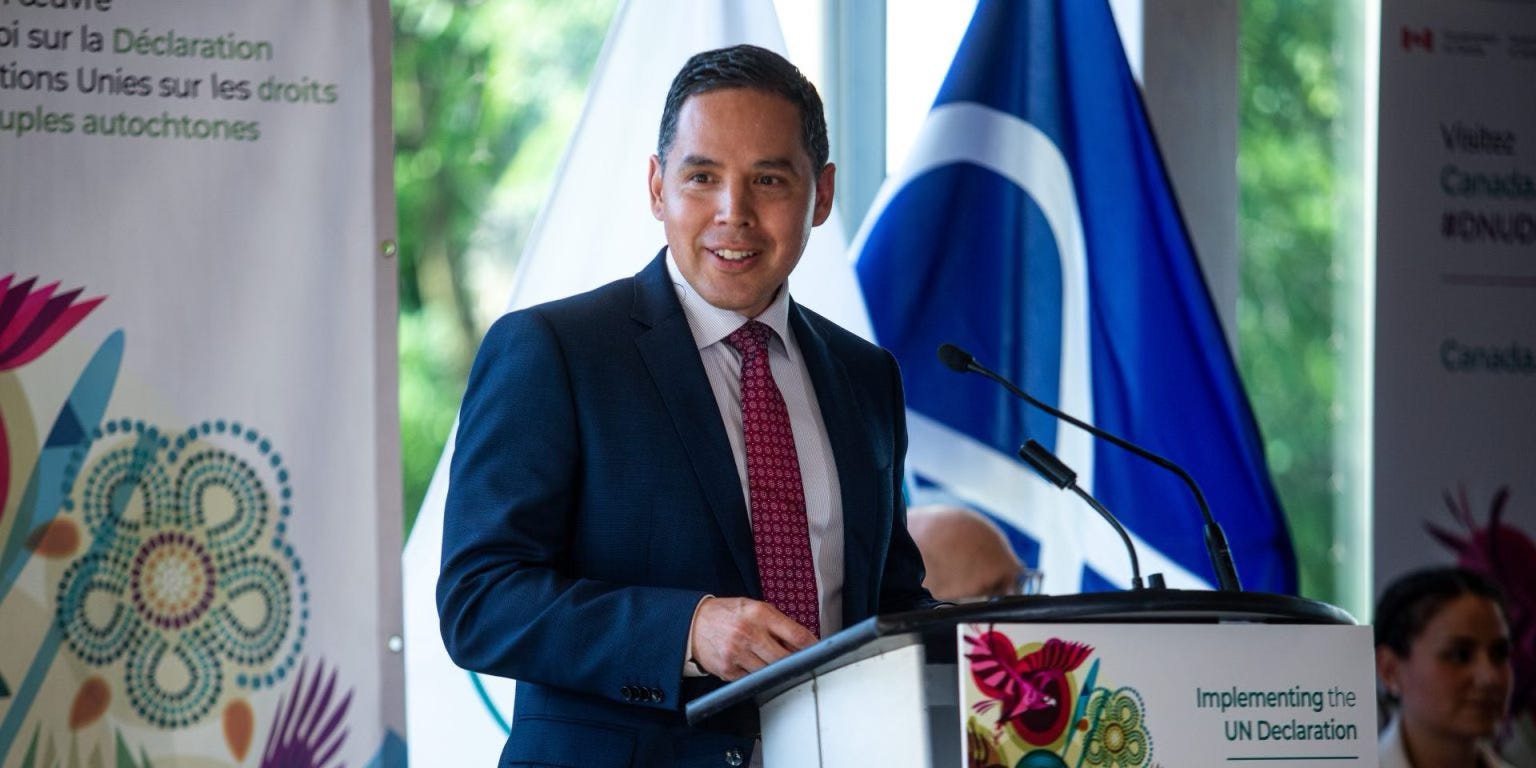
Another way to establish sovereignty is to establish settlements as a foundation of Canada’s claim to Arctic maritime zones. Through Inuit communities’ presence in the Arctic, Canada exploits the principle of self-determination to exercise its presence in the North. Canada using Indigenous people to perpetuate its economic interests? Colour me shocked.
Inuit Tapiriit Kanatami is the national representative organization for Inuit in Canada. Its June 2025 document regarding Arctic sovereignty within a security and defence framework states: “As Canada turns toward the Arctic, governments must prioritize Inuit prosperity and perspectives as the foundation of Arctic security, sovereignty and defence.” In other words, Canada’s success in claiming Arctic waters cannot be established until Inuit communities are properly resourced: “Securing the Arctic requires Canada to invest in the people that live here and the services and supports needed to develop the economy.”
The document recalls that, in the past, “[m]ilitarization served as a precursor to other colonial policies, including residential schooling, forced relocations of Inuit families intended to strengthen Canada’s sovereignty claims to the region, and the slaughter of Inuit sled dogs by the RCMP to terminate Inuit mobility.” That is the danger for the Inuit: the more control the federal government has in the North, the more likely those policies endanger Inuit communities.
This is yet another reason the federal government should implement Article 3 from the United Nations Declaration on the Rights of Indigenous Peoples, which states: “Indigenous Peoples have the right to self-determination. By virtue of that right they freely determine their political status and freely pursue their economic, social and cultural development.” The implication is that Indigenous sovereignty is key to Canadian authority in the Arctic, and the vision for this country’s economic future.
Find Bad + Bitchy:


